

Facebook MarketplaceSelling a sports card collection can be a great way to turn years of collecting into cash. Whether you have a few thousand baseball cards tucked away in the basement or an entire collection of baseball, football, basketball, and hockey cards, Facebook Marketplace can be an excellent place to find buyers.
However, before you start taking pictures and listing your collection, there are a few things you need to understand about today’s sports card market.The biggest mistake sellers make is assuming that because they have thousands of cards, they have thousands of dollars worth of merchandise.
Unfortunately, 99 percent of the time, that isn’t the case. In fact, much of what people have sitting in their closets, garages, and storage units falls into a category known as Junk Wax.
Understanding Junk Wax, knowing which cards are worth grading, and setting realistic prices can make the difference between a successful sale and a collection that sits on Facebook Marketplace for months and NEVER SELLS!
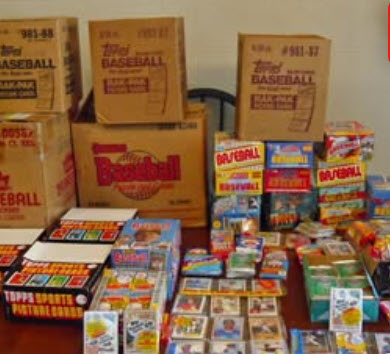
1. Understanding the Junk Wax EraIf you collected sports cards during the late 1980s and early 1990s, chances are you own a lot of Junk Wax.The Junk Wax Era generally refers to the period from approximately 1987 through 1994, although overproduction extended beyond those years in some cases.
During this time, sports card manufacturers produced enormous quantities of cards. Companies such as Topps, Donruss, Fleer, Score, and Upper Deck flooded the market with baseball cards.
Why?
Because collecting was booming. Everybody wanted cards of their favorite players. Manufacturers responded by printing millions upon millions of cards.The problem was that too many cards were produced. When something is printed in extremely large quantities, it becomes much harder for that item to maintain value.
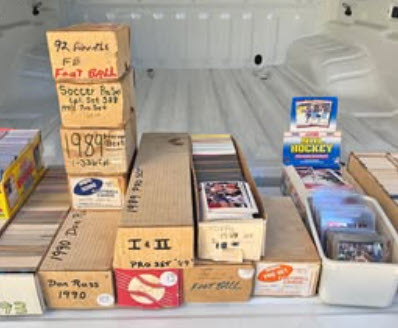
Even today, there are enormous numbers of unopened boxes, complete sets, and individual cards from this era still floating around. You might have 10,000 cards featuring popular players, Hall of Famers, and even some of the biggest names in baseball history. Unfortunately, that doesn’t automatically make the collection valuable.
The reality is that most Junk Wax cards have very little monetary value. A card featuring a famous player isn’t necessarily a valuable card. A card being 35 years old doesn’t automatically make it rare. And having 500 copies of the same player doesn’t mean you have 500 valuable cards. Supply and demand determine value, not just age or player popularity.
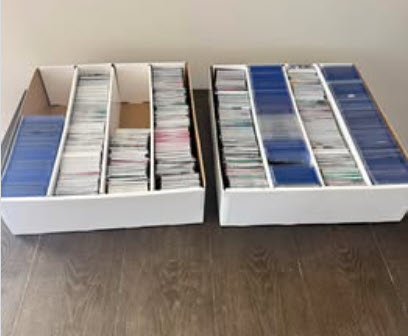
2. What Is Junk Wax Actually Worth?This is where sellers sometimes get frustrated. A common bulk-buying benchmark for Junk Wax collections is approximately $1 per 1,000 cards, 50.000 Cards $50.00.
These are rough bulk-market figures, not guaranteed offers or a universal price guide. Actual offers depend on the condition, organization, players, sets, and whether the collection contains anything worth pulling out individually.
But the point is important: Junk Wax is generally a volume business, not a high-dollar individual-card business. Think about it from the buyer’s perspective.
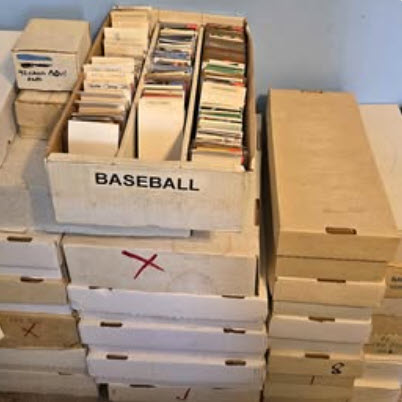
They have to purchase the cards, transport them, sort through them, store them, and eventually try to resell them. If a buyer gives you $50 for 50,000 cards, they are taking on a tremendous amount of work for a relatively small potential return.
This is why you shouldn’t expect someone to pay hundreds or thousands of dollars simply because you have several boxes of cards.
3. Don’t Assume Your Collection Is Worth Thousands One of the biggest mistakes sports card sellers make is pricing their collections based on what they see other people asking on Facebook Marketplace. Asking prices and actual selling prices are two completely different things.
You might see someone advertising a 1989 baseball card collection for $500. That doesn’t mean anybody is willing to pay $500. Before listing your collection, do some research. Look at actual completed sales on eBay rather than relying on asking prices. Search for the specific card, year, manufacturer, and condition.Pay particular attention to:
- Rookie cards of significant players.Short-printed cards. Error cards with established collector demand. Rare inserts.Autographed cards.Numbered cards. Vintage cards from earlier decades. Cards in exceptional condition.
4. Should You Have Your Cards Graded by PSA? One of the most common questions collectors ask is whether they should send their cards to PSA for grading.
PSA, or Professional Sports Authenticator, is one of the best-known sports card grading companies in the hobby. PSA examines cards for authenticity and condition, then assigns a numerical grade, typically from 1 to 10.
A PSA 10 represents Gem Mint condition, while lower grades reflect various imperfections. Grading can make a tremendous difference in the value of certain cards. However, it is not a magic trick that turns an ordinary card into a valuable one.
For example, a common 1989 baseball card might be worth only a few cents raw. Even if you receive a PSA 10, it may not be worth enough to justify the grading expense. The Cost of PSA GradingPSA grading fees vary depending on the service level, declared value, turnaround time, and current pricing.You also need to consider expenses beyond the basic grading fee:
- PSA grading fees.Shipping to PSA.Return shipping.Insurance.Supplies and protective packaging.Potential membership costs, depending on the submission option.
- Strong collector demand.Significant value in high grades.Excellent centering. Razor Sharp corners.Clean surfaces.A realistic chance of receiving a high grade.
5. How to Organize Your Collection Before SellingYou don’t need to spend six months sorting every card, but a little organization can help you get a better offer. I recommend separating your collection into a few basic categories:
Vintage Cards: Generally older cards from the 1970s and earlier. These deserve extra attention because certain vintage cards can have significant value.
Modern Cards: Cards from the late 1990s through today. These should be evaluated based on players, rookies, inserts, parallels, and current collector demand.
Junk Wax Cards: Primarily late 1980s and early 1990s overproduced cards. These are generally best sold in bulk.
Star Players and Hall of Famers: Pull out recognizable names and research them individually. Don’t assume every card of a famous player is valuable.
Graded Cards: Keep PSA, SGC, Beckett, and other professionally graded cards separate.This approach allows you to advertise the collection more accurately and prevents potentially valuable cards from getting buried in boxes of common cards.
6. Selling Your Collection on Facebook MarketplaceFacebook Marketplace is a great place to advertise sports card collections because you can reach local collectors without having to ship thousands of cards.The key is creating an honest listing with good pictures and a realistic asking price.Take Good PicturesTake pictures of:
- All the boxes included.The overall size of the collection.Representative stacks of cards.Any valuable individual cards.Graded cards.Sealed boxes or factory sets.
If you exaggerate the value, you will probably lose potential buyers. Price It to Sell You can certainly start a little higher to leave room for negotiation, but don’t get carried away.
Remember, buyers are looking for a deal, and they understand that bulk collections take time and effort to sort through. A realistic price will generally attract more serious buyers than an unrealistic price that sits online for months.
7. If Somebody Will Buy Your Junk Wax, SELL IT! This might be the most important piece of advice in this entire article.If you find somebody willing to buy your Junk Wax collection, take the opportunity and sell it!
Seriously.You might have 20,000, 30,000, or even 50,000 cards sitting in your garage. You might have spent years collecting them. You might remember buying packs as a kid, trading with friends, and putting your favorite players into plastic sleeves. There is sentimental value in those memories. But sentimental value and market value are two different things.
Ask yourself a simple question:What are those cards doing for you right now?
Are they sitting in boxes collecting dust?
Are they taking up valuable storage space?
Are you going to spend countless hours sorting through them in hopes of finding a card worth a few dollars?
If someone comes along and offers you $20, $30, $50, or whatever amount you have agreed upon for a large collection of common Junk Wax cards, consider taking the money. You are getting rid of something that has limited demand, freeing up space, and putting cash in your pocket.
You could spend weeks trying to sell individual cards and end up making less money when you account for your time. There is absolutely nothing wrong with accepting a reasonable bulk offer. In fact, sometimes getting a few dollars for something that would otherwise sit in storage is a great deal.
Just make sure you have separated any potentially valuable cards before selling the bulk collection.
8. A Sample Facebook Marketplace ListingHere is an example of how you might advertise your collection.
Title: Large Sports Card Collection – Baseball, Football, Basketball – Must Go! Selling a large sports card collection accumulated over the years.Collection includes thousands of cards from various manufacturers and years, including Topps, Donruss, Fleer, Score, and Upper Deck. Most of the collection consists of cards from the late 1980s and early 1990s, commonly known as the Junk Wax Era. Great opportunity for someone who enjoys collecting, sorting, organizing, or purchasing sports cards in bulk. Cards are being sold as a collection. I am not interested in sorting through thousands of individual cards or selling them one at a time. Buyer is welcome to inspect the collection before purchasing.Serious buyers only. Cash preferred. Local pickup.Message me with questions or a reasonable offer.
9. Final Thoughts: Be Realistic and Get Your Collection SoldSelling a sports card collection isn’t necessarily about getting rich.Sometimes it’s about turning something you’ve had sitting around for decades into a little extra cash.The sports card market has changed dramatically since the late 1980s and early 1990s.
Millions of cards were produced, and the supply of common cards is still enormous.Don’t confuse having a large collection with having a valuable collection. Do your homework. Pull out the cards that have legitimate value. Research grading costs before sending anything to PSA.
Check actual sold prices instead of relying on inflated asking prices.And most importantly, don’t be afraid to sell your Junk Wax in bulk.If somebody is willing to haul away thousands of common cards and put some money in your pocket, that might be the best deal you’re going to get.
Remember: A collection sitting in your garage is worth nothing to you until you decide what to do with it. Sometimes the smartest move is to take the reasonable offer, clear out the space, and move on to the next thing.
If you currently have a collection to sell, D & D will make you an offer. Learn more here